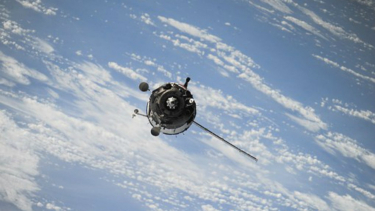
Scientist Explains How to Measure Actual Earth Age

- Pixabay/Steven Goddard


VIVA – The Earth is now 4.54 billion years old, during which time it has experienced continents forming and disappearing, ice sheets expanding and contracting, and life evolving from single-celled organisms to blue whales.

But how do we know how old the Earth is? According to a geologist at the University of Colorado Boulder Becky Flowers, when an Earth scientist looks at a rock, it's not just a rock because it's like the rock has a story that can be deciphered.
"When minerals form out of magma or lava, they often contain traces of radioactive material, such as uranium. Over time, those radioactive elements decay, meaning they spew radiation, eventually transforming them into new, more stable elements that remain trapped inside the mineral," Becky continued.

Take radioactive uranium-238, a common form of uranium. Its atoms will release energy until they eventually turn into a lead. That process occurs at a fixed rate known as a half-life, which corresponds to the amount of time it takes for half of the atoms to decay.
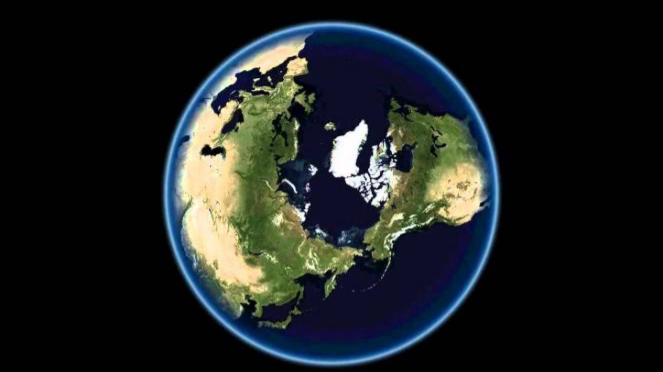
Ilustrasi Bumi.
- U-Report

The half-life of uranium-238 is more than 4 billion years, meaning it takes more than 4 billion years for half of the uranium-238 in a sample to become lead. This makes it perfect for dating objects that are very, very old.
By knowing these half-lives, we can calculate how old a rock is based on the ratio of the "parent" radioactive element and the "daughter" stable element, a method called radiometric dating.
The mineral zircon is commonly used for radiometric dating because it contains a relatively large amount of uranium, Flowers said. Uranium-lead dating is just one type of radiometric dating.
Other types use different elements; for example, radiocarbon dating, one of the most common methods, uses a radioactive isotope of carbon that has a half-life of thousands of years and is useful for dating organic matter.