Scientists Have the Answer Why There are No Gas Moons

- NASA


Jakarta – All planets in our solar system come in two forms, rocky and gaseous. But all the moons in our solar system are rocky, even those orbiting the gas giant Jupiter. There are two possible reasons why there are no gas moons.

Outside our Solar System, more than 5,500 exoplanets have been discovered, but only 2 exomoons (moons outside our Solar System) have been found, although they are not 100% confirmed.
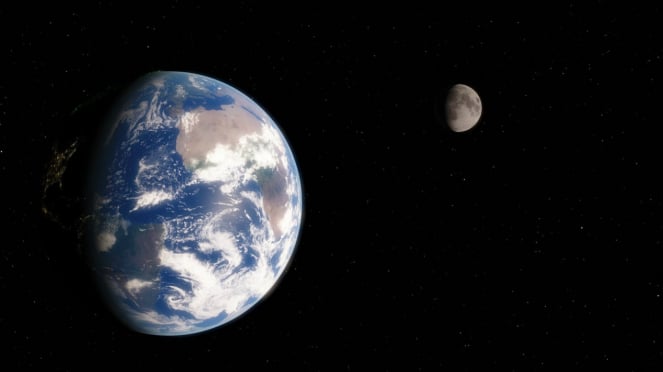
Ilustrasi Bumi dan Bulan.
- www.pixabay.com/

Both exoplanets are gas giants orbiting larger gas giants.
Before finding out why the Moon didn't form in gaseous form, it's worth discussing how gas planets form. There are two known gas planet formation scenarios: bottom-up and top-down formation.

Bottom-up formation of gas planets
The bottom-up scenario is how the gas giant planets in our Solar System formed. Scientists believe that 4.5 billion years ago, the sun was still surrounded by a disk of gas and dust.
This disk was the protoplanetary disk where all the planets formed. At first, the planets accumulated as rocky bodies, and continued to grow as dust, pebbles, and asteroids accumulated.
Some only grow to the size of Mars or Venus, but others continue to grow to form giant rocky planets that can reach 10 times the mass of Jupiter.
As they grow, these gas planets have strong gravity to pull gas from the protoplanetary disk.
How much gas they collect depends on gravity and how much gas is available nearby.
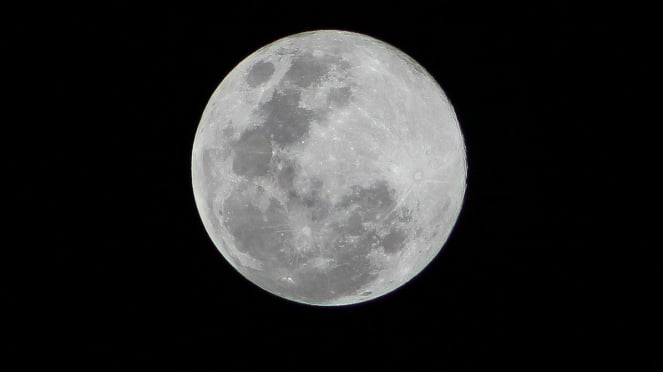
Ilustrasi Bulan.
- Twitter/@ikhsan_jayaa
Top-down planet formation
The top-down scenario forms directly from the collapse of a gas plume inside a nebula, an interstellar cloud made up of dust, gas, and plasma. However, there is a minimum amount of mass that can result from the top-down formation process.
Large clumps of gas shrink under their gravity and heat up as they are squeezed into smaller, denser volumes.