This Advanced Camera to Take a 1,000-year long Exposure Photo

- VIVA.co.id/Arianti Widya


Jakarta – A University of Arizona professor is hoping to capture the changes of a Tucson landscape over the next thousand years, setting up a primitive pinhole camera for a super-long exposure that will be ready to be viewed in 3023.

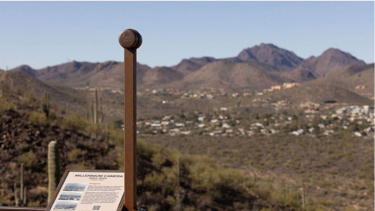
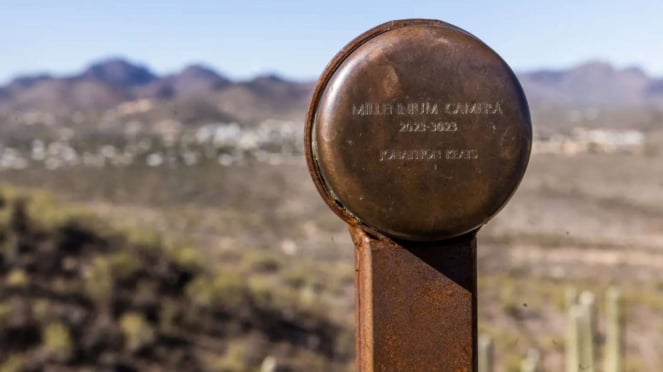
Jonathon Keats, 52, has mounted his Millennium Camera on a steel pole overlooking a desert area that is the site of new housing development in the foreground of a mountain range.
The research associate at the university’s school of fine arts says he hopes his photography project will double as a “philosophical instrument” that will make people consider humanity’s profound impact on our environment over the next millennia.

“Whatever happens over that time span is recorded in an image that will be visible ideally to those in the future,” Keats said, adding that he hoped the project would also encourage present-day consideration of “hyper urbanization.”
Kamera 1.000 tahun di Arizona
- New York Post

“It is equally directed at us in the present and through time because we might be motivated to change the picture to make it one that we want them to see.”
The long-exposure pinhole camera was known about as early as 500 BC, according to researchers.
Keats went back to basics and used the archaic technology for his project because, “nobody’s going to remember to change the batteries after 300 years if you have a digital camera (and) in 1,000 years people might not know how to develop a physical photograph.”
The low tech camera focuses sunlight through a pinhole and projects it onto film at the back of the camera, where imprints of the landscape will be slowly made over time.
Keats used a renaissance oil painting technique for his canvas: a pigment called red madder was painted onto copper that had been rubbed with pumice and garlic to create a photo sensitive surface that will “fade very gradually.”