Mohammad Mokhber as Interim President After Ebrahim Raisi's Death

- VIVA.co.id/Natania Longdong


Iran – With the death of President Ebrahim Raisi, Iran’s first vice president, Mohammad Mokhber, becomes interim president.

Mokhber is a conservative political operative with a long history of involvement in large business conglomerates closely tied to Iran’s supreme leader, Ayatollah Ali Khamenei.
In a statement on Monday, Khamenei said that Mokhber must work with the heads of the legislature and judiciary to hold elections for a new president within 50 days.

Vice presidents in Iran are typically low profile, operating more as players within the government than as public figures.
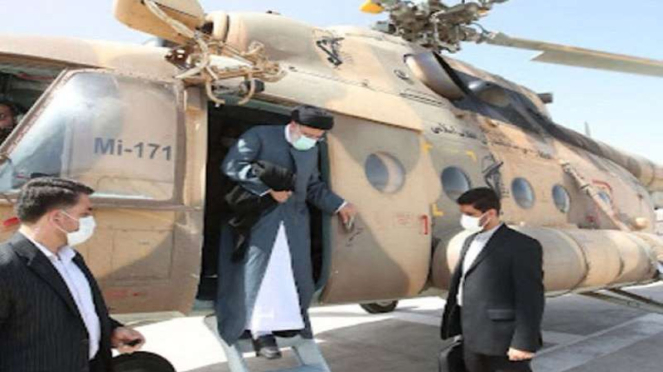
Presiden Iran Ebrahim Raisi saat menumpang Helikopter Mi-171
- Tasnim

“Iran’s vice presidents have traditionally not been contenders to succeed their bosses,” said Robin Wright, a joint fellow at the U.S. Institute of Peace and the Wilson Center in Washington.
“The bigger question, is who will the regime allow to run for the office," she added.
As information, Mokhber is around 68 years old and became first vice president in August 2021.
He is originally from Khuzestan Province in Iran’s southwest, bordering Iraq and the Persian Gulf.
He was a deputy governor there, and during the Iran-Iraq war in the 1980s served as a member of the Revolutionary Guards medical corps, as quoted from Nytimes site.
One of Mokhber’s relatively few high-profile appearances came when he and three other senior Iranian officials went to Moscow in October 2022 to complete a sale of Iranian drones and ballistic missiles to Russia, for use in the war in Ukraine.
Raisi chose him as vice president after Mokhber held senior positions in some of Iran’s most powerful organizations, including the Mostazafan Foundation, Sina Bank and Setad, a conglomerate entirely controlled by Ayatollah Khamenei that has billions of dollars in assets and was involved — not entirely successfully — in efforts to make and distribute a Covid-19 vaccine.
All three organizations are part of an opaque network of financial entities that are tied to the Iranian state, although they are not directly state-owned.