Reframing Chinese Migration in Southeast Asia

- Pixabay


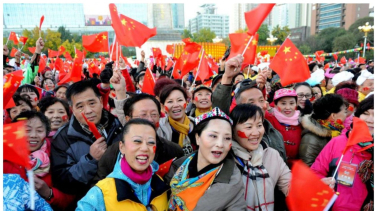
Jakarta, VIVA – The recent influx of Chinese nationals into Indonesia and Southeast Asia should be studied using a new academic and policy framework, according to regional experts.

Rather than labeling these individuals simply as "migrants," scholars argue for a more nuanced understanding of their presence and impact, especially given the complexities of their roles and intentions.
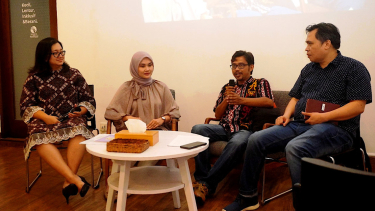
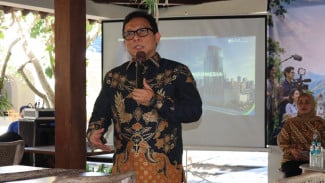
This perspective was prominently voiced by Professor Leo Suryadinata, senior fellow at the ISEAS-Yusof Ishak Institute in Singapore, during a seminar titled “The Role of New Chinese Migrants (Xin Yimin) in Southeast Asia”, held at Universitas Pelita Harapan (UPH), Jakarta, on June 25, 2025.

The event was co-hosted by UPH’s Master's Programs in Communication Science and International Relations, alongside the Indonesian Sinology Forum (FSI).
Professor Suryadinata, a widely respected scholar on Chinese diaspora issues and recipient of Indonesia’s cultural award in 2018, said the term "migrant" has been loosely applied to a category of newcomers from China who are mostly transient.

They come as workers, students, or investors, often in large groups, and rarely seek to assimilate with local communities.
“These groups are different from the older generations of Chinese who migrated due to poverty and chose to build new lives in Southeast Asia,” Suryadinata explained.
He added, "They do not subscribe to the idea of luodi shenggen — putting down roots in a new land. Instead, they are like lotus leaves drifting without anchoring.”

Indonesian Sinology Forum (FSI)
- Indonesian Forum Sinology
Unlike the older generations - mainly from Fujian, Guangzhou, or Hainan - who integrated into local cultures and regarded Southeast Asia as their homeland, the Xin Yimin view the region as a stopover point, not a final destination.
“Because they arrive in large numbers, they tend to interact only within their circles, making integration very difficult,” he stated.
This lack of integration, he warned, could stir social tension.