List of Proven and Unproven Predictions by Albert Einstein

- U-Report




VIVA – The scientist from Germany, Albert Einstein, was famous for his extraordinary intelligence. Although he has passed away, his discoveries are very meaningful to scientists and even society in this century.

Albert Einstein is known to have fallen in love with math and physics since he was young, even when he was 12 years old, he was able to study Euclide's algebra and geometry and managed to prove the truth of Pythagorean theorem.
As quoted from the Earthly Mission website on Monday, December 5, 2022, here are Albert Einstein's predictions that proven and not:

1. Gravitational Lens
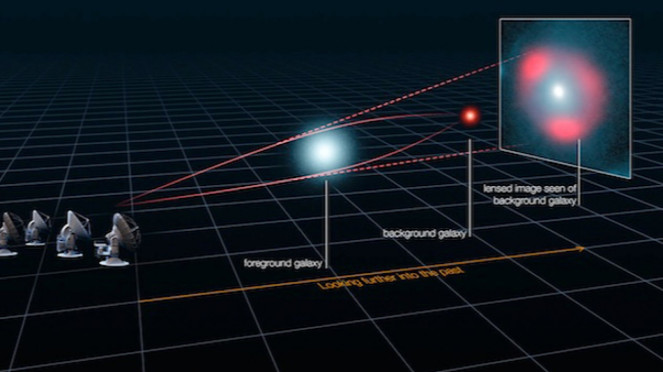
Lensa Gravitasi
- NASA

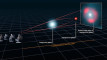
A gravitational lens is a collection of matter (such as a group of galaxies) between a distant light source and an observer that can deflect light from the source as it moves toward the observer.
Unlike optical lenses, gravitational lenses produce maximum deflection of light passing closest to its center and minimum deflection of light moving farthest from its center. As a result, gravitational lenses do not have a single focal point but only focal lines.
2. Gravitational Waves

Gelombang gravitasi
- Vimeo
A gravitational wave is a disturbance in the curvature of spacetime produced by accelerated mass, which propagates as a wave outward from its source at the speed of light. It transports energy as gravitational radiation, a form of radiant energy similar to electromagnetic radiation.
3. Dilation of Time
Albert Einstein
- Getty Images
It is the difference in the elapsed time measured by two clocks, either because they have relative speeds to each other or because there is a difference in gravitational potential between their locations.
After compensating for the varying signal delay due to the change in distance between the observer and the moving clock (such as the Doppler effect), the observer will measure whether the moving clock was ticking slower than clock at rest in the observer's frame of reference.
A clock is close to a massive object (and therefore has a lower gravitational potential) will record less elapsed time than a clock that is located further away from the massive object (and which has a higher gravitational potential).